
How To Clear A House After A Bereavement: A Sensitive Step-By-Step Guide
Knowing how to clear a house after a bereavement can be difficult because there is more to consider than simply emptying the property. Personal possessions may need to be kept by family members, important paperwork can be mixed among everyday belongings, items may form part of the estate, and some decisions may need to wait until the legal position is clear.
A sensible approach is to avoid rushing. First establish who is responsible for the estate, secure the property, identify important documents and possessions, and check whether items need to be valued. You can then sort what should be kept, sold, reused, recycled or removed.
This guide explains how to approach each stage in a practical and respectful way.
What Should You Do Before Clearing A House After Someone Dies?
Before beginning a full bereavement house clearance, establish who has authority to make decisions about the property and possessions.
In England and Wales, the person responsible for administering an estate may be an executor or administrator. GOV.UK explains that personal representatives are legally responsible for the deceased person’s money, property and possessions during the administration of the estate. Probate may also be required before some assets can be dealt with.
This does not necessarily mean that nothing in the house can be touched. It does mean that you should be careful about permanently removing, selling or giving away possessions before you understand their status within the estate.
If you are uncertain about your authority to deal with belongings, speak to the executor, administrator or a solicitor before making irreversible decisions.
A Step-By-Step Approach To Clearing The Property
Breaking the job into stages can make a difficult task considerably more manageable. You do not have to make a decision about every possession on the first day.
Step 1: Secure The Property
Before concentrating on the contents, make sure the property itself is reasonably secure.
Depending on the circumstances, practical tasks might include locating keys, checking doors and windows, identifying who has access and making sure important documents and valuables are not left unsecured.
If the property will be unoccupied for some time, the person responsible for the estate should also check what needs to be done regarding the property’s insurance and ongoing utilities.
Avoid cancelling services automatically without first considering whether they are still required while the estate is being administered.
Step 2: Find Important Documents Before Sorting Everything Else
Paperwork can easily be mistaken for clutter, particularly in a home containing many years of correspondence.
Before carrying out a large-scale clearance, look carefully for potentially important documents such as:
- the original will and any codicils
- property paperwork
- bank and financial documents
- insurance policies
- pension information
- tax records
- share certificates and investment documents
- vehicle documents
- bills and account information
- identification documents
- keys relating to the property, vehicles, safes or storage
This is particularly important because an executor applying for probate may need the original will, while the estate must normally be valued as part of the probate process.
If you find documents that you do not understand, keep them aside rather than deciding immediately that they are no longer required.
Step 3: Identify Personal Items The Family Wants To Keep
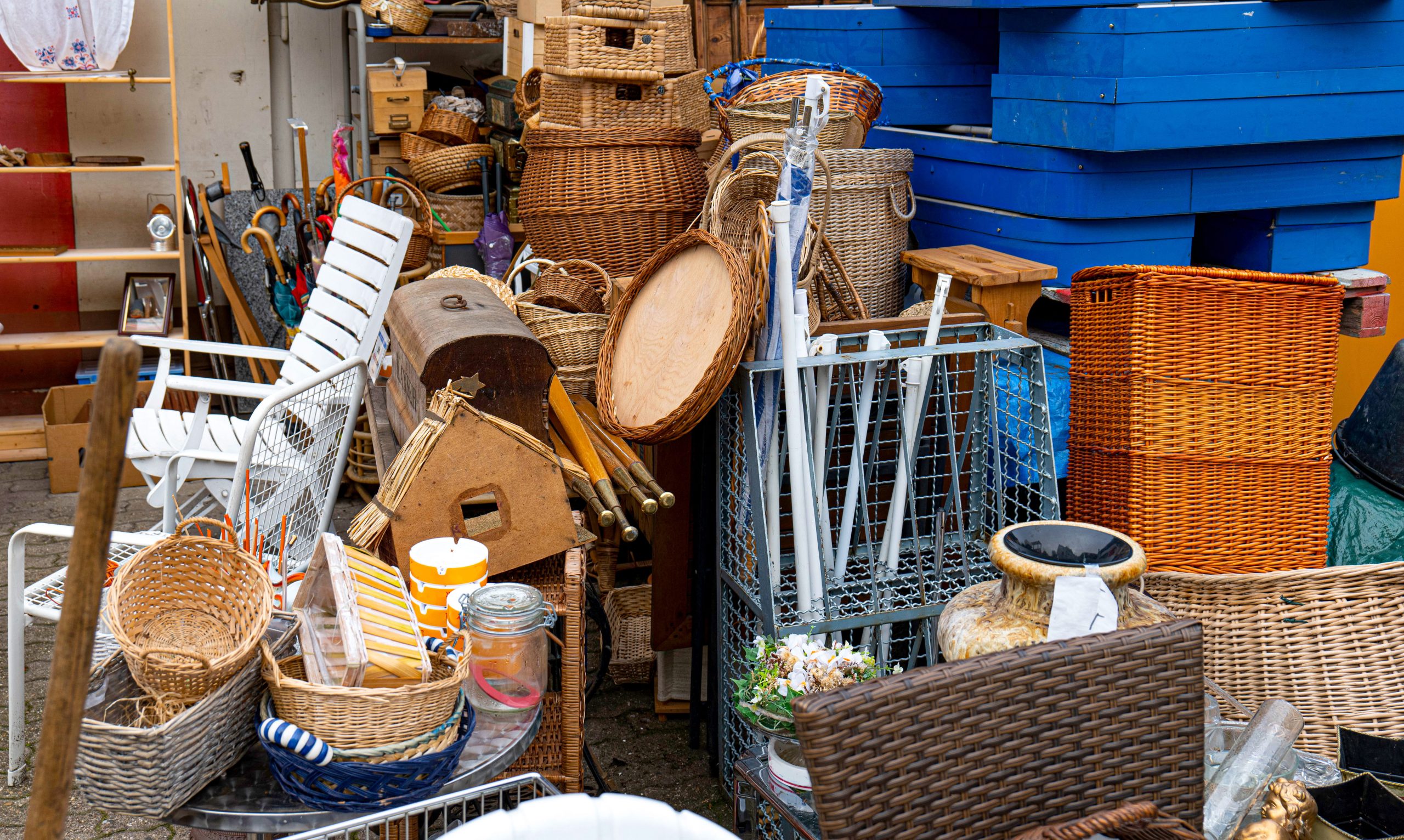
Next, separate belongings that clearly should not form part of the physical clearance.
This might include photographs, letters, jewellery, family records, sentimental possessions, collections and items specifically left to somebody in a will.
Where several family members or beneficiaries are involved, labelling boxes with the person’s name can be more practical than immediately moving everything to different addresses.
It can also help prevent a sentimental or valuable possession from accidentally becoming mixed with items intended for removal.
There is no need to decide the future of every personal item immediately. A temporary “undecided” category can be useful when family members need more time.
Step 4: Check Whether Items Need To Be Valued
One of the most important differences between ordinary decluttering and clearing a deceased estate is that belongings may have financial as well as personal significance.
Before selling, donating or removing potentially valuable possessions, check whether they need to be included when the estate is valued.
Items that appear ordinary can sometimes have value, particularly jewellery, artwork, antiques, collections, watches, specialist equipment or certain pieces of furniture.
If you are uncertain, keep the item aside until its position has been established rather than making a quick decision.
Step 5: Sort The Remaining Contents Into Clear Categories
Once important documents, personal possessions and items requiring further assessment have been separated, sorting the remaining contents becomes easier.
A practical system is:
- Keep or distribute
- Requires valuation or further decision
- Sell or reuse
- Donate where suitable
- Recycle
- Remove as waste
You do not necessarily need to physically move everything into six different piles. Labels, separate rooms or a simple written inventory may be easier, particularly in a heavily furnished property.
Take extra care with cupboards, drawers, boxes, coat pockets and furniture containing storage. Important possessions are not always kept somewhere obvious.
Step 6: Decide What Can Be Reused, Sold Or Recycled
A bereavement house clearance does not mean that every unwanted possession has to become waste.
Depending on condition and suitability, furniture and other belongings may have potential for reuse, sale, donation or recycling.
At A1 House Clearances Brighton, our clearance process includes identifying reusable and recyclable materials where possible. Saleable items may also be considered when a clearance is assessed and, where appropriate, their value can potentially reduce the clearance cost. This depends on the individual items and should not be assumed for every clearance.
Separating these items before final disposal can both preserve value and reduce unnecessary waste.
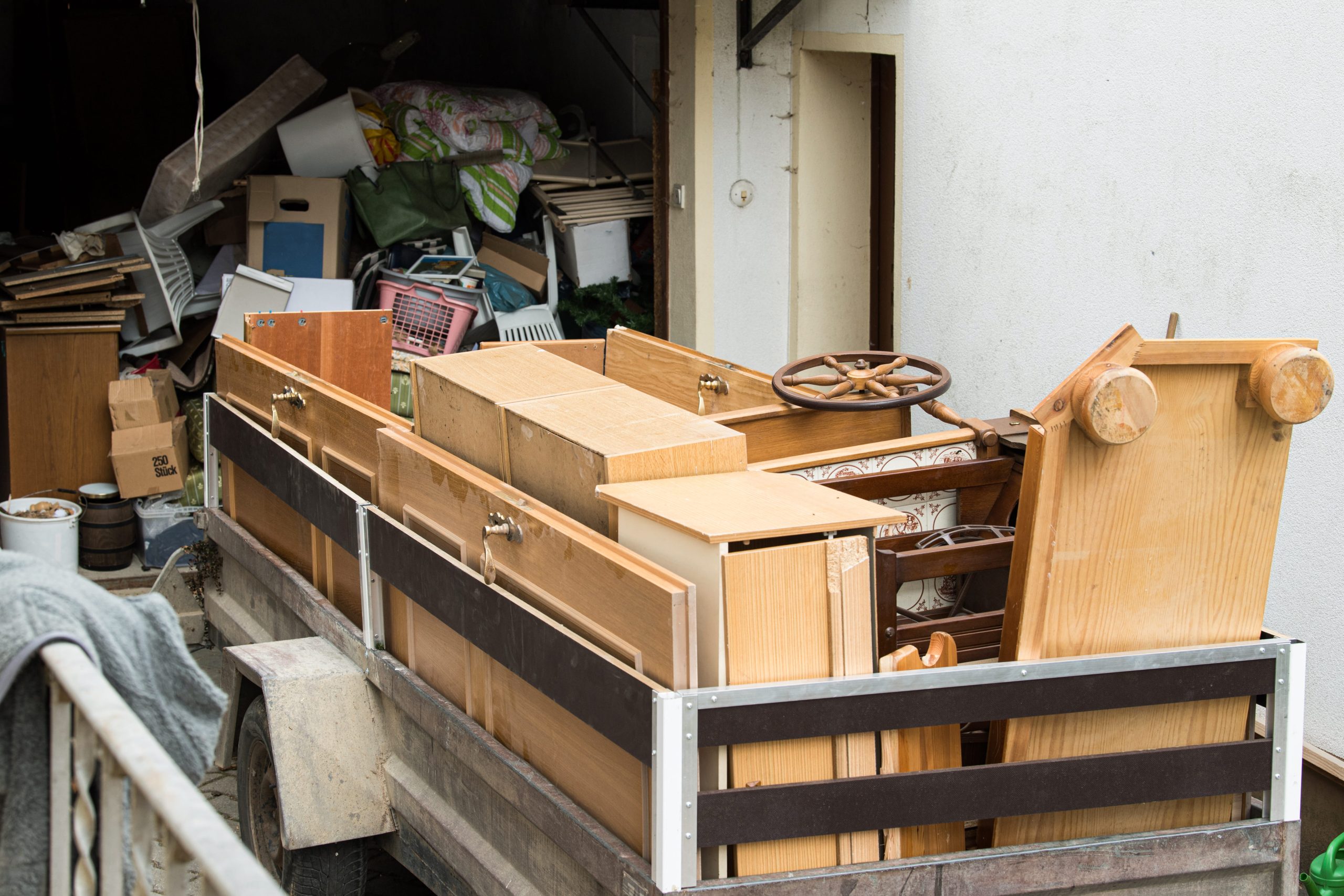
Step 7: Plan The Physical House Clearance
Once you know what must remain in the property and what can leave, you can decide how the actual clearance should be handled.
For a small property with relatively few belongings, family members may be comfortable handling much of the work themselves.
A professional clearance may become more practical when:
- the entire property needs emptying
- there is a large quantity of furniture or belongings
- heavy items need moving
- lofts, garages or sheds also need clearing
- family members live some distance away
- the property needs clearing to a deadline
- the amount of sorting or lifting has become difficult to manage
If you use a private company to remove waste, we advise householders to check that the business is authorised to carry waste and has a valid registration. We are proud to be authorised.
A1 House Clearances Brighton is an Environment Agency registered waste carrier and provides house clearance services for situations including probate and bereavement clearances.
Step 8: Deal With Remaining Rubbish Responsibly
After reusable, valuable and sentimental possessions have been separated, there may still be general household contents requiring removal.
The appropriate route will depend on what the property contains. Some material may be recyclable, while other items will need suitable waste disposal.
For larger quantities of unwanted household items, we also provide rubbish clearance alongside our wider property clearance work.
Step 9: Check The Property Before Anything Leaves
Before the final collection, walk through the house again.
Check:
- drawers and cupboards
- wardrobes and pockets
- lofts
- garages and sheds
- under beds
- behind furniture
- filing cabinets
- safes or lockboxes
- storage containers
- vehicles associated with the property
If several people are involved in administering or inheriting from the estate, make sure everybody who needs to approve the clearance has had the opportunity to do so.
A final check is far easier than trying to recover an important possession after it has left the property.
Step 10: Prepare The House For What Happens Next
The required standard after clearance depends on what is happening to the property.
For example, it might need to be prepared for sale, returned to a landlord, transferred to a beneficiary or simply left secure while the estate continues to be administered.
Once the contents have been removed, cleaning may also reveal minor maintenance issues that were previously hidden by furniture or belongings.
Where required, A1 can combine clearance work with house cleaning, rather than the family having to arrange the two stages separately.
Take The Clearance One Stage At A Time
Clearing a house after a bereavement is easier to manage when it is treated as a sequence of decisions rather than one enormous job.
Start with authority, documents and possessions that matter. Establish what needs to be valued or retained. Only then move on to sorting, reuse, recycling, physical clearance and cleaning.
If the physical clearance becomes too large or time-consuming to manage, A1 House Clearances Brighton can assess the property and provide a free, no-obligation quote. Assessments can be made through a site visit or, where suitable, using WhatsApp images or video.
For properties in Brighton, Hove and surrounding areas of Sussex, you can contact us to discuss the property and next steps.